
“Do you have an idea how many people PPI training reaches?” A PPI friend asked me this question recently. He was thinking not only of church leaders who take our courses, but people in their churches and beyond. It got me thinking – and excited!
 The short answer is, Only the Lord knows how many people PPI training touches for Christ. I don’t. And that’s a good thing. But it still got me thinking.
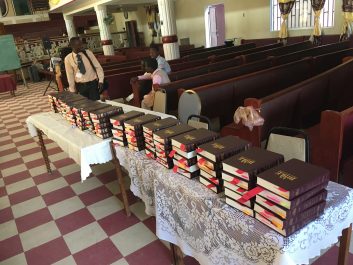
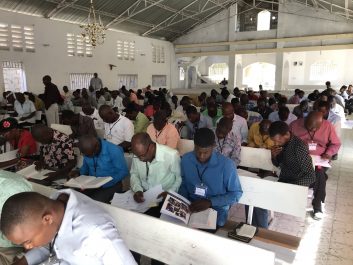
We typically train 112 church leaders in each course. Every pastor who completes Course 1 receives a Thompson Chain Reference Bible. Each church leader who completes any PPI course receives at least two Creole Bibles. To date, we have entrusted over 1200 Thompson Bibles and resource books to pastors in Haiti, around 3000 Creole Bibles and gospel tracts beyond counting.
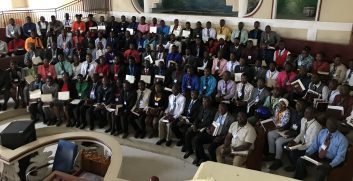
But how many people? Roughly 10% of church leaders enrolled in our courses come from the same church. So, approximately 100 churches are represented in each PPI course. And each church ministers to 100 people in its congregation and neighborhood, some more.
It’s not a stretch to think that 1000 people are reached with the life-changing truth of God’s Word through each PPI course.
Let’s paddle this canoe a little farther: This July, we will offer three (3) courses to 336 church leaders in two different cities in northern Haiti. By His grace, the Lord could use our training to touch the lives of more than 3000 people with the truth of the gospel. Let’s keep going: As the Lord provides funding, we plan to offer three more courses this year and 11-12 courses in Haiti in 2023. God could allow us to reach 15,000 people in Haiti this year and next? You begin to see the multiplying Kingdom potential of encouraging, training and resourcing front-line church leaders in Haiti and other developing nations!
 It’s good to gaze at the horizon once in a while, but let’s not stay in these clouds, friends. God has called us to faithful, daily and one-by-one ministry. Each course deserves our best in preparation, prayer and implementation. Every church leader who attends needs our respect, encouragement and personal instruction. Each trip requires our best spiritual and logistical preparation.
In whatever we do – in whatever you do – in Jesus’ mission, let’s be faithful, daily and one-by-one. This is the mission strategy that God used to spread the gospel, disciple believers and plant churches across the known world in the first 30 years of the church. It’s proven effective!

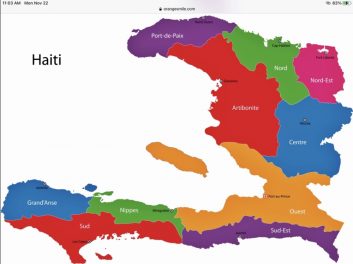 This strategy allows us to train pastors in each key city
  So beginning in February 2023, as the Lord provides, we will travel to Haiti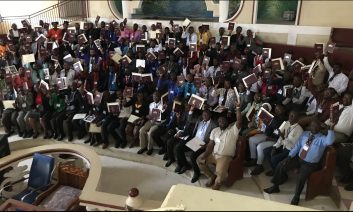
 Hebert Elien Johnson is a young pastor, just getting started in ministry. He knows English quite well and has served as one of our translators for 3-4 years. Hebert loves the Lord and is in love with Nandjie (pronounced
 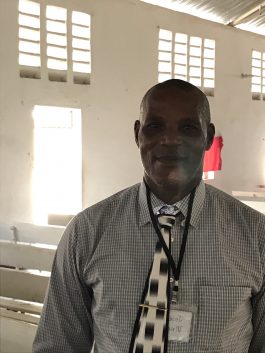 Near the end of our conversation, Pastor Ulrick looked across the room at me and said, “Pastor Ken, I have a question for you?” The other pastors stopped talking as Esau translated.