
Think about how often you use water in a day. What would you do if you didn’t have easy access to water? What if it was expensive and hard to get?
I arrived home from Haiti just after midnight last night. After hugs and conversation with Rena, I took a shower, drank a glass of water and went to bed. When I woke up this morning, Rena already had the sprinklers running on our front lawn and flower beds.
I used the restroom, washed my hands and headed downstairs to make breakfast – oatmeal (made with water not milk) topped with blueberries, juice and coffee. We don’t have a Keurig so I added four cups of water to our coffee maker, ground some beans and began to brew. My favorite smell in the morning! Rena went outside to turn off the sprinklers before she heads to work.
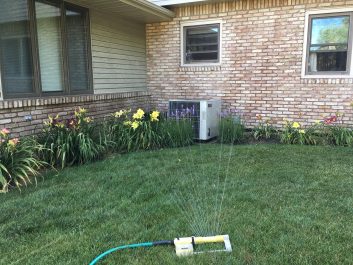 I couldn’t help thinking about it: How many gallons of water did I use between last night and this morning? My 10 minute shower required 20 gallons of water. I flushed 1.5 gallons this morning and no doubt used another gallon to wash my hands and make my breakfast – all while we applied over 200 gallons of water on our lawn and landscaping! Live-work-sleep-repeat. I take all this for granted. Life in these United States.
What if it were different? What if you and I didn’t have easy access to water? What if water was expensive and scarce? What would we do? How would we live?
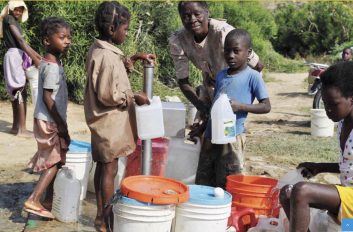 Welcome to Haiti. Most Haitian families walk to a community well with a hand-pump to get their water for cooking, cleaning and bathing. Wells in Haiti typically are shallow and contaminated. If the family has enough money, they buy drinking water from local suppliers. Those too poor to buy drinking water drink from the well. Families that live in the central part of a city have access to a rudimentary version of city water called Dinepa, but the monthly cost is expensive so many forego the luxury. And they still need to buy drinking water.
Water is precious, expensive and hard to get for most Haitian people. Even in the oppressive heat of July, I doubt Haitians drink more than 16 oz of water in a day. They likely use less than 2 gallons each day for cooking, cleaning and washing up. Thank the Lord for organizations working to provide inexpensive access to clean water in Haiti.
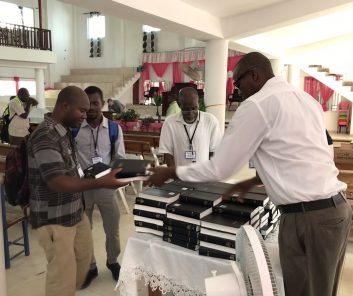
The same is true of the living water of God’s Word. Bibles are precious, expensive and scarce in Haiti. The Thompson Chain Reference Bibles that we use to train Haitian church leaders aren’t sold by any organization in Haiti. Even if it were, it would cost a pastor nearly a month’s pay to buy it. Creole Bibles are nearly as hard to come by. They now cost $13 USD (over 1500 Haitian gourdes) and are hard to get. Donate toward Bibles HERE
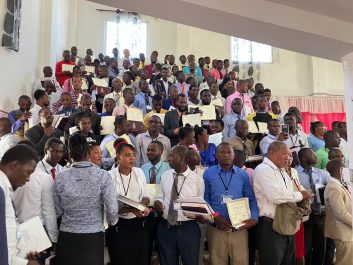 By God’s grace and with your faithful partnership, we awarded Thompson Bibles to 112 church leaders who completed PPI Course 1 last week. We provided over 600 Creole Bibles to nearly 300 Haitian pastors who finished any one of three courses we offered over these past two weeks. These Bibles are so needed – and so precious – to these faithful brothers and sisters in Christ!
Let’s open the faucets, friends! Let’s make God’s living water accessible to as many church leaders in Haiti as possible! They are eager for the Lord to use them to help others drink the water of the Word of God.
How can we keep all the Water for ourselves and live in the delusion that “it’s like this everywhere”? It’s not! May God help us to open our eyes and hearts to our brothers and sisters in Christ in nations like Haiti! Donate toward Bibles HERE
Thanks for listening to my thoughts on my first morning back in the States. Now I need to wash up my breakfast dishes, brush my teeth, and get to work.
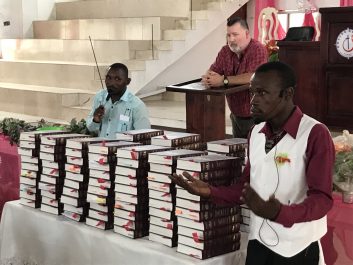 What he said next gave me goosebumps. “A group of pastors prayed together here at this church,” he told us. “After that, an older pastor who had prayed with us had a dream. He saw a plane landing in Haiti. As it landed, seeds came from it that were planted in the ground.” The older pastor told the group not to worry. “God will send us Bibles for Haiti,” he assured them. The pastor looked at Esau and me: “You are the answer to our prayers!”
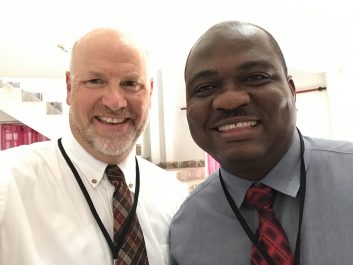 Pastor Pierre (pictured) was so excited to take PPI Course 1 – The Message and the Messenger. He told me that he had pastored in La Romana, Dominican Republic, for seven years before returning to Haiti to lead a church in Ouanamiinthe. He asked if we could consider offering PPI training to the many Haitian church leaders there. “Pastors need this training in La Romana,” he said. I told him that, as the Lord provides funding and opens doors, we will.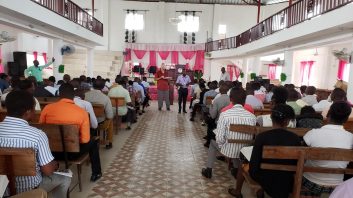
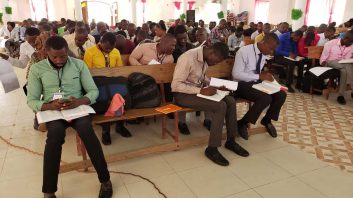
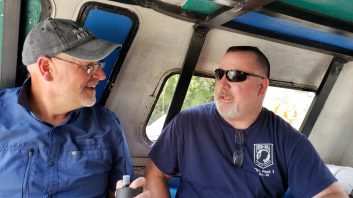
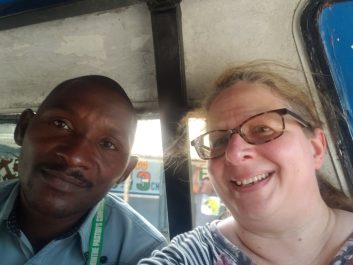
 Brian and Dawn Clark and I fly to Haiti via Florida this Friday.
 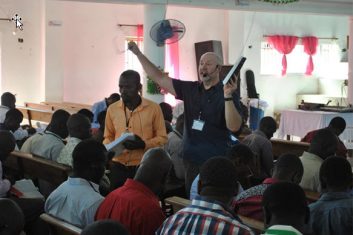 We will lead Course 2 and Course 1 back to back in Ouanaminthe on July 11-16 (Mon-Sat), then we’ll travel north to Cap Haitian to lead Course 2 there on July 18-20 (Mon-Weds) before returning to the U.S. on July 21. We will also visit two Haitian churches (I’ll preach for one), lead a Bible College class, and spend time with a group of young adults learning English. We’ll have full days as always!