I think we’d all agree that we shouldn’t text and drive though some of us do it anyway. Much less should we drink and drive – at least not alcohol. But we can and should make the most of our time while traveling especially when we travel alone. I’ve tried to do that on this trip to Haiti.
I took two days (Thurs-Fri, Feb 17-18) to drive to Dallas because I needed to take materials for Dallas Seminary’s missions conference. (I took part in the conference on March 7-10, immediately after my time in Haiti.) Two days of driving gave me time to listen to good worship music (for me, mostly Selah and Matt Maher), pray, listen to Scripture and also listen to Charles Spurgeon’s Lectures to My Students. I also spent brief but wonderful time with our youngest son, Kurt, and daughter-in-law, Jen. They graciously put me up for a night at their home in Memphis, Tennessee.
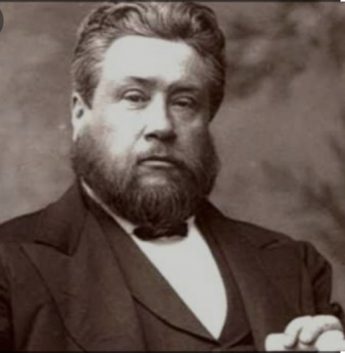 Spurgeon’s Lectures to My Students captures his weekly lectures to young men training for ministry at his Bible college. His talks are personal, practical and often witty. Every church leader – and most Christians – would benefit from reading (or in my case, listening) to this classic. Although Spurgeon pastored in London in the mid-1800s, he still speaks clearly to church life today. To sharpen my tools for encouraging and training church leaders in Haiti, I wanted to refresh my memory of Spurgeon’s biblical and practical advice to young pastors. I wasn’t disappointed.
On my flight from Dallas to Fort Lauderdale, I started reading another book written in the 1800s. Dr. John Nevius served in China and wrote The Planting and Development of Missionary Churches after 25 years of mission ministry there. I heard about this little book at the Evangelical Theological Society conference in November, ordered it immediately afterward. I have been looking forward to reading it.
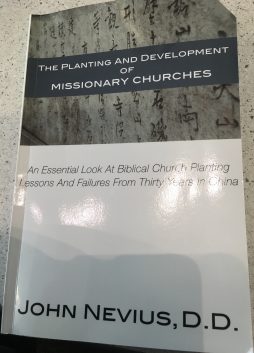 What a gem! Dr. Nevius speaks biblically and practically to church life and leadership today in the United States and in countries like Haiti. His main point in the book is that Christians like us from wealthy nations should be super-careful in how we use mission money in poor countries. Specifically, he’s convinced by long experience that our paying or “sponsoring” pastors and other church workers in poor nations makes a mess. It creates dependency, expectations, laziness, disrespect, and jealousy among other negative results for gospel work. We end up with “mercenary pastors and Christians.” And, man, have I seen this in Haiti – and heard and read about it in countries around the world. With the best of intentions, we can do more harm than good for the progress of the gospel, discipling of believers, and training of church leaders. We need to give generously but invest wisely in training and resourcing – precisely what PPI is committed to in Haiti and other developing nations.
 While in Haiti, I used the little free time we had to focus on learning more Creole – speaking with our team, looking up words in my travel-sized Haitian dictionary and writing notes. Being immersed in the language with our Haitian team moved me forward piti piti (“little by little”)!
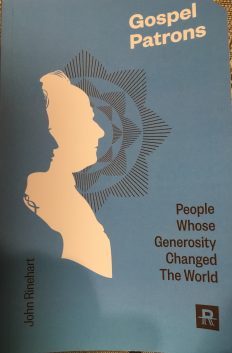
I also took time to review my notes and highlights in another book – Gospel Patrons by John Rinehart. I recommend this book to all of you – and anyone else interested in supporting Jesus’ mission around the world. Rinehart tells the inspiring stories of the supporters (“gospel patrons”) behind John Wycliffe’s translation of the first English Bible, the revival ministry of George Whitefield, and the reformation of the English church under John Newton. The subtitle captures the heart – and challenge – of this book: People Whose Generosity Changed the World.
Traveling back from Haiti, I needed a change of pace so I picked up Erik Larson’s The Splendid and the Vile, a gripping account of Winston Churchill’s leadership through the year-long bombing of Britain by Nazi Germany. Although it’s a longer work, it’s an easy and informative read.
Where are you reading in the Bible right now? Are you following a reading plan? That’s great! I also encourage you to focus on one book of the Bible – read and re-read (or listen and re-listen) to that book. Ask God to teach you, make notes and share with others what the Lord is showing you. I’m focusing on the book of Nehemiah right now.
What book are you reading or listening to? I recommend the books I’ve mentioned here, and I know many other good books are out there. Let’s make the most of our time to grow in the Lord and sharpen our understanding of His mission. Speaking of, I need to sign off for now. I want to get back to my reading . . .
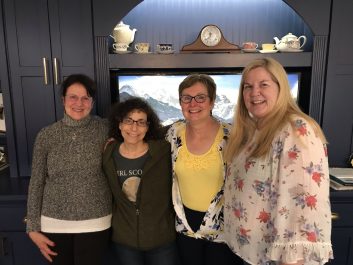 Diana mentioned that our former neighbor was coming into town that evening and would love to see us. This neighbor and friend is Jewish. We had a good connection when we lived here and had opportunities to share gospel truth with her and her husband as we spent time together. So later that evening we met with her and two other friends to catch up on life, listen, love and encourage. We talked until after midnight. Unexpected and sweet gifts from the Lord!
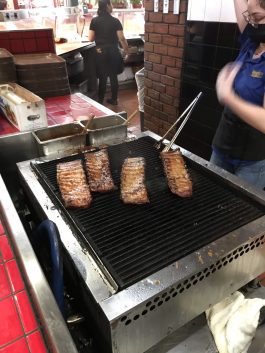
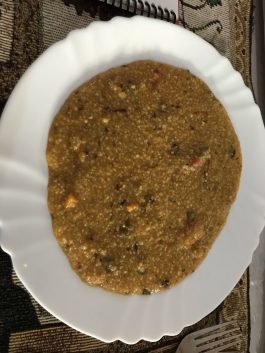 I grew up with grits, you know, the white hominy breakfast food. Called mayi (“corn”) in Creole, these grits were made over a charcoal fire, seasoned with Haitian spices with bits of shrimp thrown in for good measure. Your mama never made grits like this – and they are tasty! Other breakfast foods are spaghetti without sauce but spiced well, ze (eggs) served with lettuce, sliced tomatoes, onions and green peppers. This latter was my go-to to keep my stomach in order. I’ve learned to eat light when I go to Haiti – a little breakfast with coffee and a small lunch of chicken and rice. That keeps me healthy and happy through the days of training!
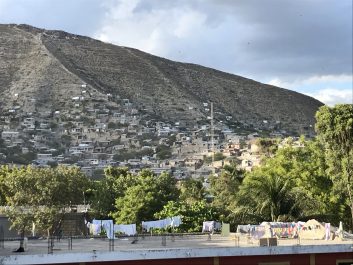
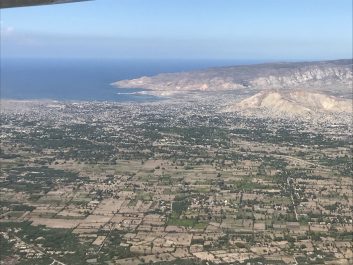 Gonaives lies on the northwest coast of Haiti about 100 miles from Cuba and is the capital of the Artibonite Department. This city of 300,000 people sits on flat land at sea level, making it vulnerable to hurricanes and their resulting tidal waves. In 2004, Tropical Storm Jean sent a storm surge 10 miles inland that flooded the entire city and killed 3000 people. Church leaders still talk about it. Gonaives also is known as the birthplace of Haitian independence because Haitian slave leader, Jean-Jacques Dessalines, read Haiti’s declaration of independence from France on January 1, 1804. Haitians celebrate their independence day by eating simple, tasty soup called joumou that commemorates their humble beginnings as a nation.
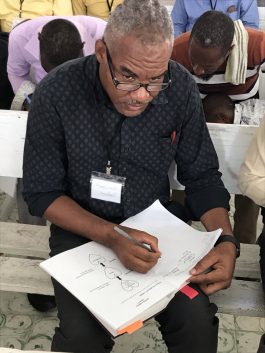
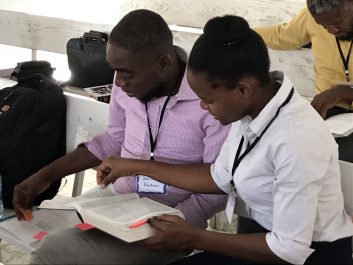
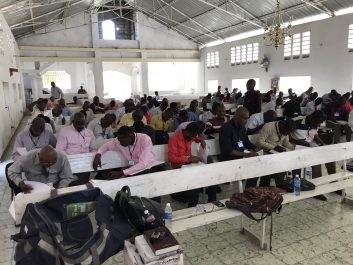
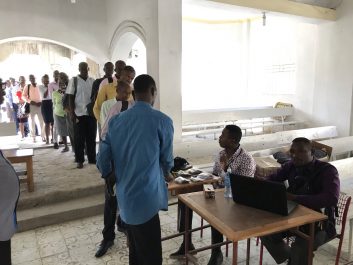
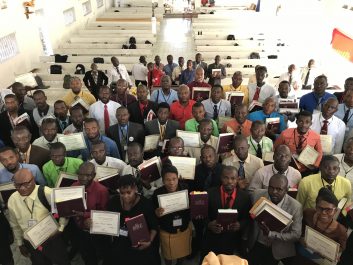 We finished training 115 pastors in Gonaives a few hours ago.
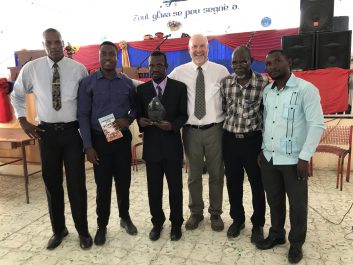 Pastors who came to this training from other cities pleaded with us to bring PPI training to their cities. We asked them to pray for us and told them that our team will meet tomorrow morning to pray and talk about our next cities.
 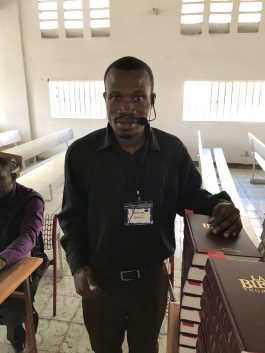 I’ll also talk more with our team tomorrow about their part in leading training sessions and, soon enough, entires days of the training. Hebert led a review on day one, and Esau led all of Session 7. Both did well. Esau taught especially well. Pastors respect him, and he interacted with them so well today, encouraging their responses and reinforcing their learning. Mentoring and coaching pastors to lead PPI training, especially Course 1, remains high on my and our Board’s priority list. We made good progress toward that goal on this trip!
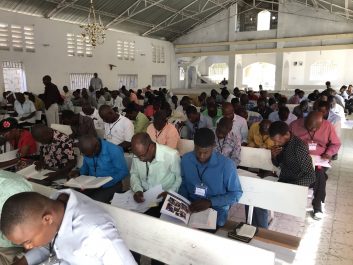 The Lord is answering all of our prayers! We began our first day of training this morning with 115 pastors – our absolute maximum – and several on the waiting list. The pastors are eager to learn, and the Lord continues to teach us how to be clearer and more effective in equipping them. At the end of the day, we asked Pastor Christoph, the president of the Gonaives evangelical pastors organization (FRERH), to tell the pastors about the association and to close our first day in prayer. He took more time to share how the Lord had answered their prayers in bringing PPI training to Gonaives. He said, “We are privileged to participate in such a high level of training that also speaks to their hearts.” Praise God!
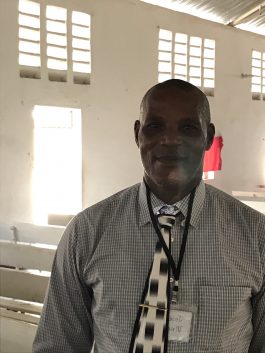 Ulrick’s church is located in a very poor part of the city of Ouanaminthe. He realized early on that many families were too poor to send their children to school. Parents must pay for their children’s education, even in government schools. But the Lord continued to nudge Pastor Ulrick about the need to help families in their neighborhood. So Ulrick and members of his church established a small elementary school and invited families to enroll their children without cost. This was a big step of faith for them because they have very little money themselves. But they believed the Lord wanted them to take this step and trust Him.